What is BioResonance and Bioresonance Biofeedback Therapy?
Vector NLS works on Bioresonance Biofeedback concept. The vibration of the atoms in cells creates frequencies. The frequencies of cells make up frequencies of organs which are analyzed by Vector Biofeedback. These frequencies are altered in diseased states. These tiny differences can be picked up by sophisticated hardware and software of Vector NLS Machine. The machine can compensate for the energy difference in a biofeedback mode. This is Bioresonance Biofeedback Therapy. Bio-resonance Biofeedback therapy uses electromagnetic waves to correct a host of physiological disorders. These electromagnetic waves are of a frequency that matches the frequency of the living organism and hence, resonance takes place. Bio-resonance is performed through Vector biofeedback devices between an individual’s physical body and their vibration levels or frequency. The Vector system analyzes the various physiological functions of the body, and then generates the appropriate signal to correct any disorders that might be present.

Who Can Use Vector?
- Doctors including family doctors
- Hospitals and clinics
- Educational institutions
- Sanatoriums
- Gyms, sports centers, and various recreational departments
- Spas, beauty centers, and cosmetic facilities
- Alternative health practitioners
- Naturopaths
- Reiki practitioners
Why Should You Consider Vector Bio-Resonance?

With the amount of Biofeedback systems on the market ranging from $500-$30,000 USD, people are very confused about the quality and genuine nature of these products. It is very important that you consider all the pros and cons of systems and the companies behind them. Please ask as many questions about training, support, software updates and customer service as you possibly can in order to make the best decision. Decide on what you want the system to do for you (Analysis, therapy, remedy preparation, etc) or if you are looking for a system which does all of the above. Be prepared to pay for a good quality product but not overpay or underpay. With often going on promotions here at Vector we are always willing to help people with their budget but we also have a standard of quality which we will not compromise on. Each Vector Biofeedback purchase includes the following:
- 3 year warranty
- Technical support
- Customer service
- Software updates
- Certified training
Vector NLS vs. Ultrasound Study
Because ultrasound technology is supported by sound waves the pictures one gets through ultrasound studies are often not clear. It takes a technician who is trained in the nuances of a particular body section to read an ultrasound. It is easy to see from the examples below why the Vector Biofeedback system would provide a clearer more precise picture.
Patient D., 56. Longitudinal section: stenosis of the abdominal aorta as a result of a blood clot, which is located next to the partially calcined athermanous plaque

Patient S., aged 48. Cross section: swelling of the gallbladder wall in normal parenchyma of the liver. The patient has acute hepatitis

Patient G., 44 years old: Cirrhosis

Patient J., age 8. Longitudinal section: Ascaris in the common bile duct

Patient P. aged 36:The gall bladder contains a single large concretion

Patient S., 84 years old: Atrophy of the tail of the pancreas

Patient A., aged 68. Longitudinal sections: cysts in the pancreas

Patient G., 34 years old. Cross section: erosive gastritis

E. The patient, 42 years old. Longitudinal section: multiple cysts kidney

Patient G., 34 years old. Cross section: erosive gastritis. Patient V., aged 68. Cross-section of a tumor of the lower pole of left kidney, ureter left in germinating and causing obstructive hydro nephritis
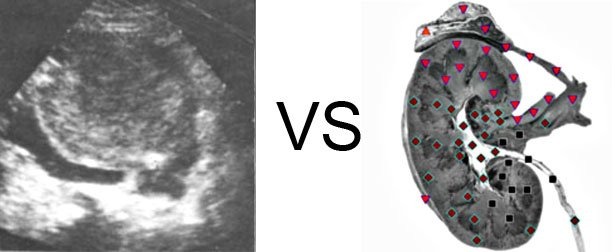
Patient S., aged 56. Longitudinal section: right kidney stone

Patient I., 65. Longitudinal section: benign adenoma in the right adrenal gland

Patient K., 38 years old: Chronic inflammation of the bladder (chronic cystitis)

Patient G., 34 years old. Cross section: varicocele with multiple dilated veins

Patient T., aged 46. Longitudinal section: a large tumor (cancer) of the cervix
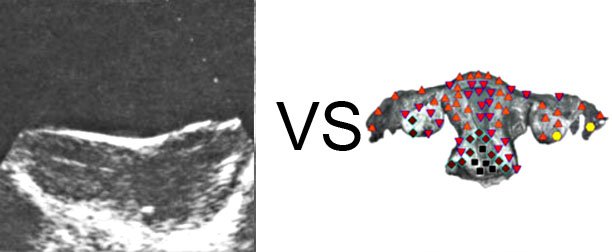
Patient M., 32 years old: Cross section: endometrium

Patient D, 41. Cross section: ovarian cyst with smooth contours